200
Hectares restoredHektar dipulihkan
A 200-hectare teak forest in Sukabumi, West Java. Bare stone in 2008. Closed canopy in 2026. Eighteen years of continuous tending, planted under Indonesia's Satu Milyar Pohon reforestation program. Open to grant, sponsorship, and stewardship partners for the next hundred years. Hutan jati seluas 200 hektar di Sukabumi, Jawa Barat. Batu gundul pada 2008. Tajuk rapat pada 2026. Delapan belas tahun perawatan berkesinambungan, ditanam dalam program reboisasi Satu Milyar Pohon. Terbuka untuk mitra hibah, sponsor, dan penjagaan jangka panjang.
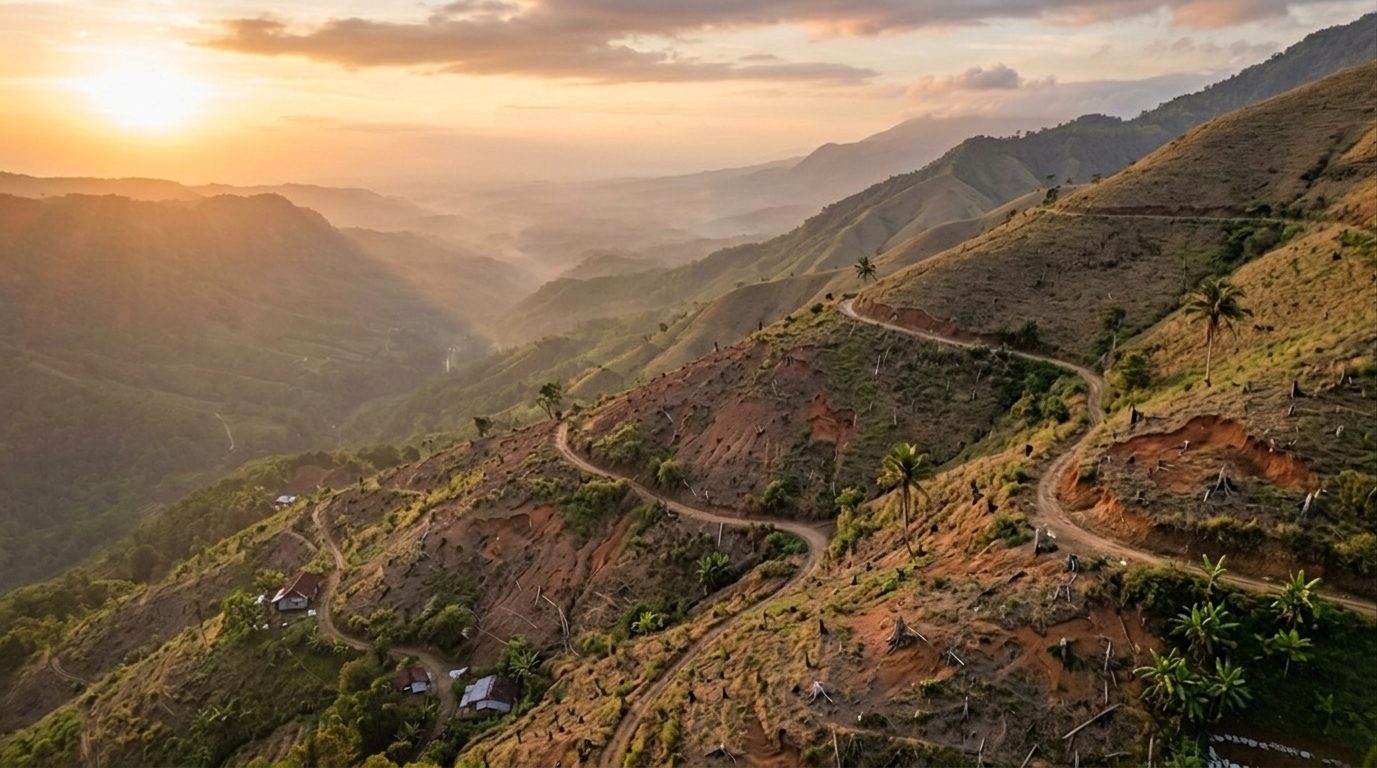
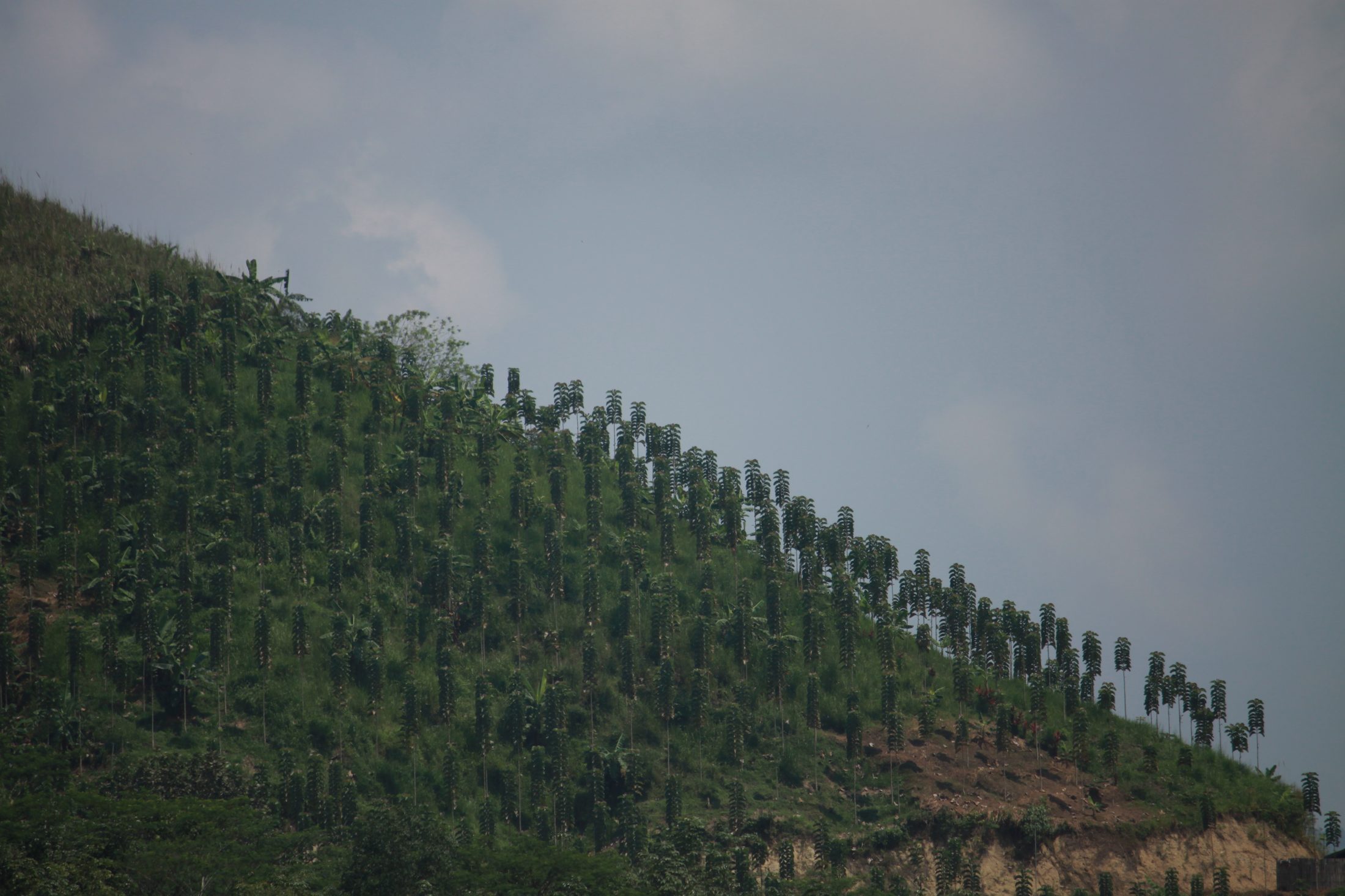
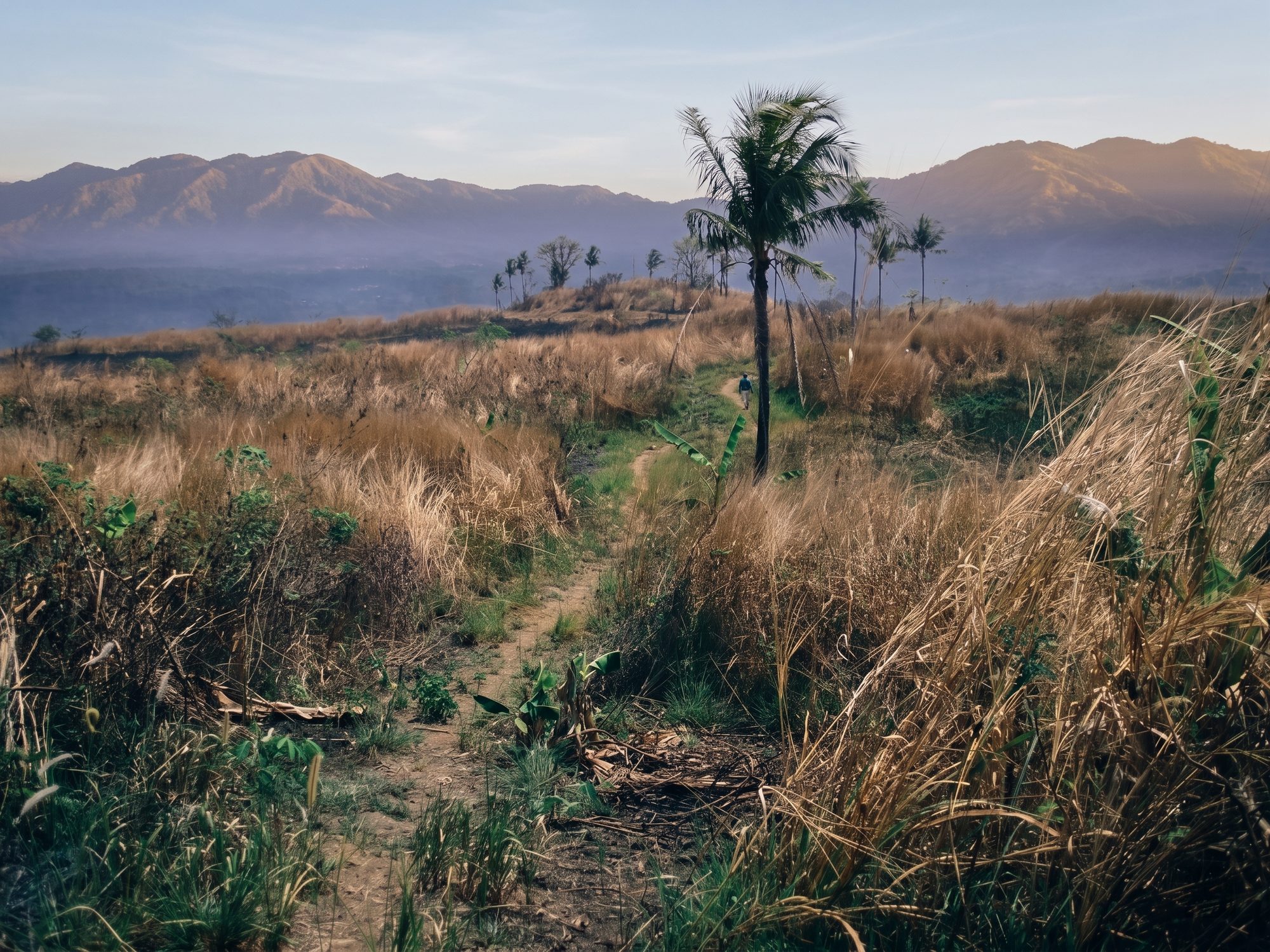
In 2008, the land was a stripped grassland on the Sukabumi hills in West Java. Years of illegal logging had taken the trees, then the topsoil had washed off the slope. The hills were bare and starting to slide. Rice farmers in the valley below had no water — the mountain that should have held it was draining straight down to sea.
Pada 2008, lahan ini berupa padang rumput gundul di perbukitan Sukabumi, Jawa Barat. Bertahun-tahun pembalakan liar telah mengambil pohon-pohonnya, kemudian lapisan tanah teratasnya terkikis dari lereng. Bukit-bukit menjadi gundul dan mulai longsor. Petani padi di lembah di bawah tidak punya air — gunung yang seharusnya menahan air mengalirkannya lurus ke laut.
That same year, the Indonesian government launched Satu Milyar Pohon, a national effort to plant one billion trees. We bought the land and joined the program. After surveying the slope and the soil, the only tree suited to conditions that hostile was teak — Tectona grandis. It tolerates thin soil, dry seasons, and rebuilds a topsoil layer beneath itself as it matures.
Pada tahun yang sama, pemerintah Indonesia meluncurkan Satu Milyar Pohon, gerakan nasional menanam satu miliar pohon. Kami membeli lahan ini dan bergabung dengan program tersebut. Setelah survei lereng dan tanah, satu-satunya pohon yang cocok untuk kondisi seberat itu adalah jati — Tectona grandis. Jati tahan tanah tipis, musim kering, dan membangun kembali lapisan tanah teratas saat dewasa.
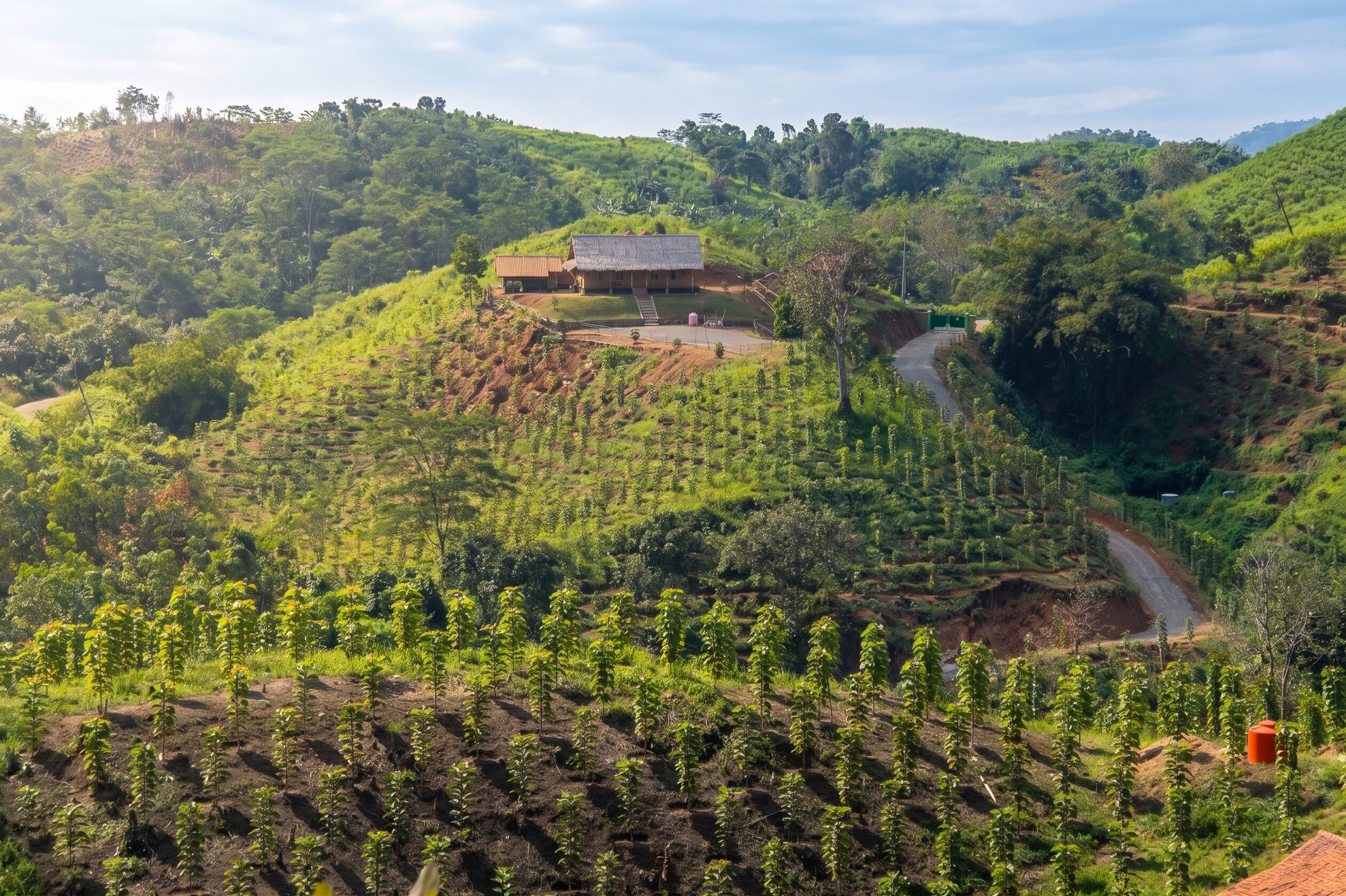
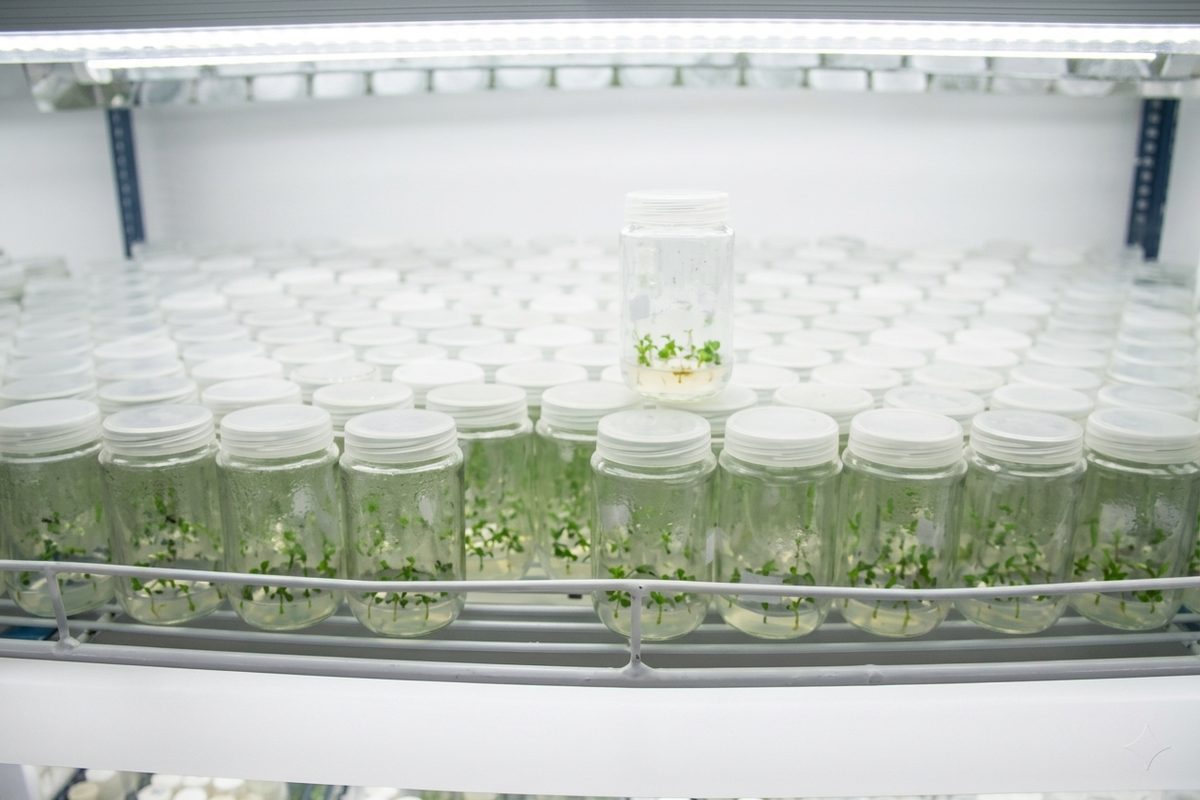
Before any tree went into the ground, we cleared the slope, surveyed and plotted the land, built roads and drainage channels, and ran a quality-controlled tissue-culture nursery to select healthy seedlings. Then we planted, fertilised, and built housing on site for the workers who would tend the trees for the next two decades.
Sebelum satu pohon pun ditanam, kami membersihkan lereng, mensurvei dan memetakan tanah, membangun jalan dan saluran drainase, dan menjalankan persemaian kultur jaringan terkontrol untuk memilih bibit sehat. Setelah itu kami menanam, memupuk, dan membangun perumahan di lokasi untuk pekerja yang akan merawat pohon-pohon ini selama dua dekade berikutnya.
Every step is documented. The nursery, the clearing, the worker team, the fertiliser schedules, the survey plots. A verification team can walk the property and read the record. The work is legible.
Setiap langkah terdokumentasi. Persemaian, pembukaan lahan, tim pekerja, jadwal pemupukan, plot survei. Tim verifikasi dapat menelusuri lahan dan membaca catatannya. Pekerjaan ini dapat ditelusuri.
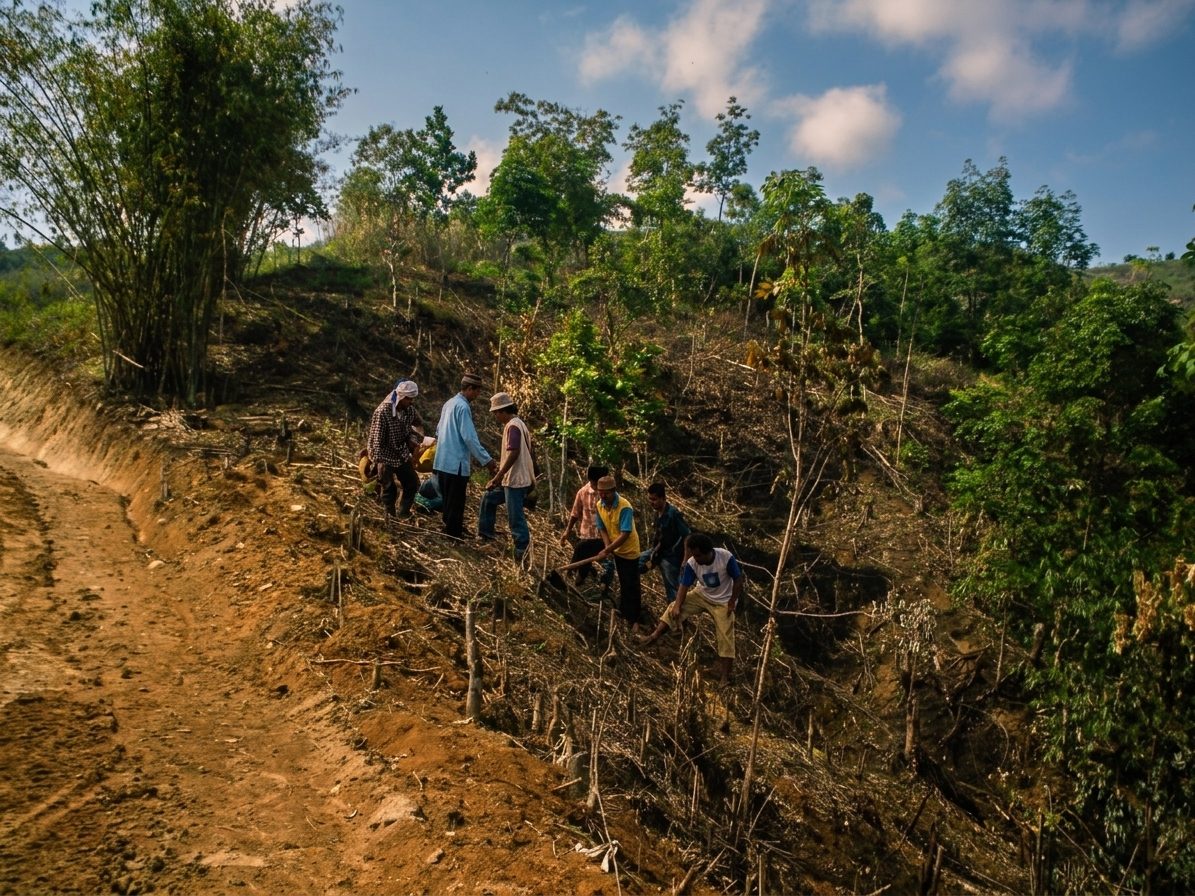
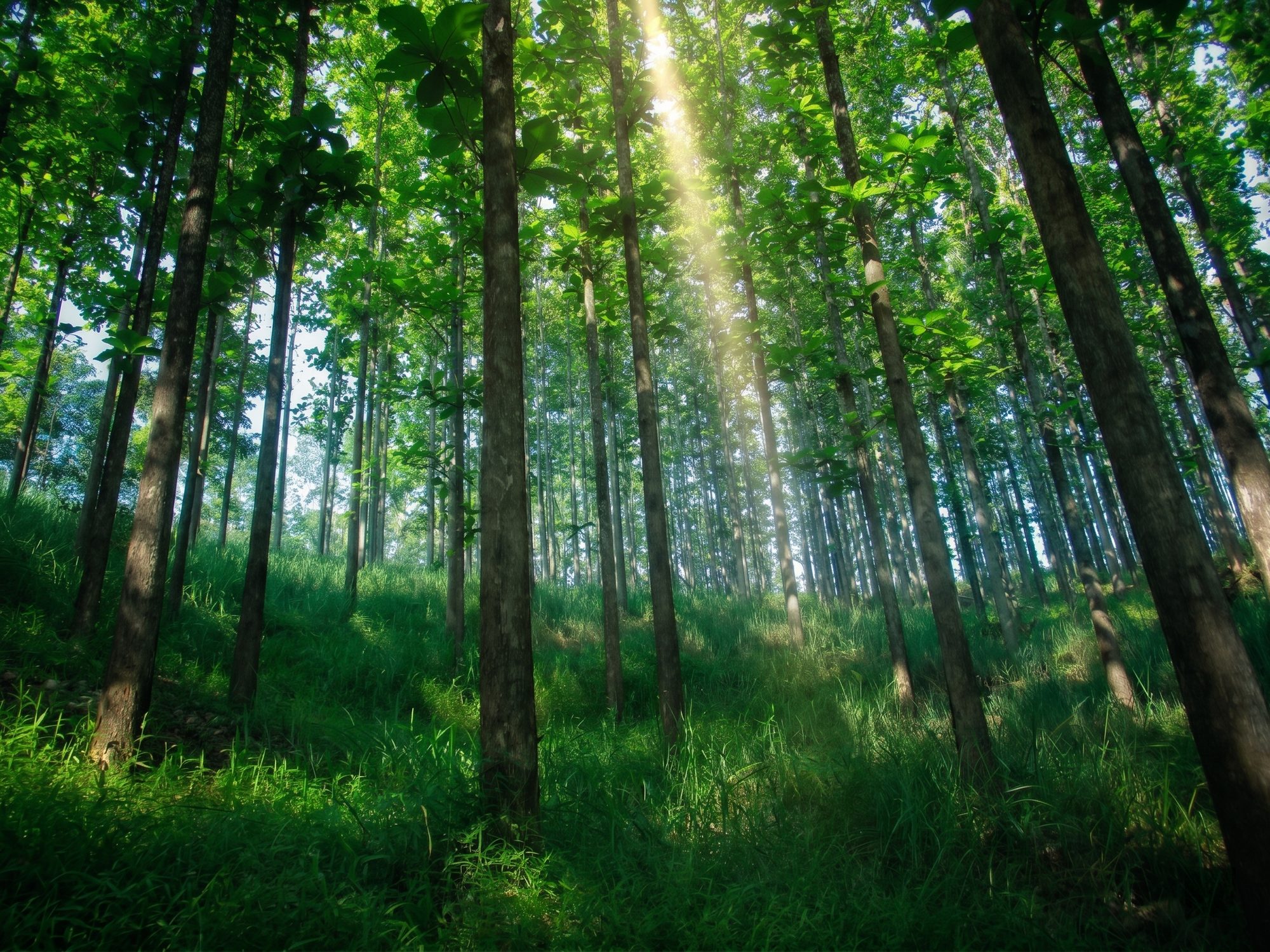
Eighteen years later, the canopy is closed across most of the property. Topsoil has rebuilt itself, slowly, from leaf fall. The rice fields in the valley have year-round water again. The slope is held by the roots.
Delapan belas tahun kemudian, tajuk telah rapat di sebagian besar lahan. Lapisan tanah teratas terbangun kembali, perlahan, dari guguran daun. Sawah-sawah di lembah kembali memiliki air sepanjang tahun. Lereng ditahan oleh akar.
Most timber operations run on a 25-to-30 year clear-cycle: plant, grow, cut everything, replant. We do the opposite. We trim selectively, year after year, and always leave more standing than we take. This is a hundred-year project. The canopy is the point.
Sebagian besar operasi kayu menjalankan siklus tebang habis 25–30 tahun: tanam, tumbuh, tebang semua, tanam ulang. Kami melakukan yang sebaliknya. Kami menjarangi secara selektif, tahun demi tahun, dan selalu menyisakan lebih banyak daripada yang diambil. Ini proyek seratus tahun. Tajuknya adalah intinya.
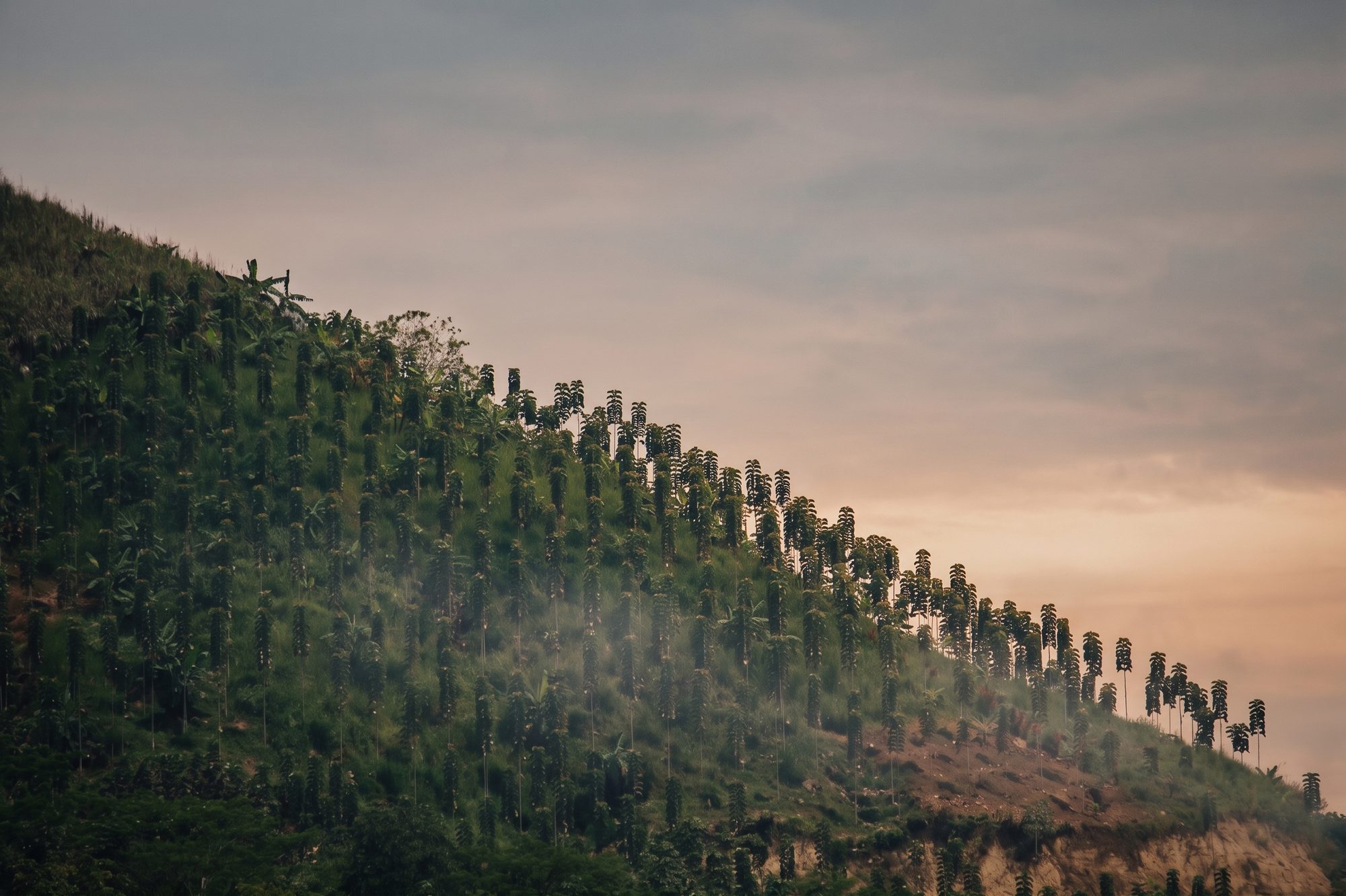
We never harvest it all. The forest stays a forest. It compounds rather than resets.Kami tidak pernah memanen semuanya. Hutan tetap menjadi hutan. Ia berbunga-bunga, bukan mengulang dari nol.Operating principle, 2008 — present.Prinsip operasional, 2008 — sekarang.
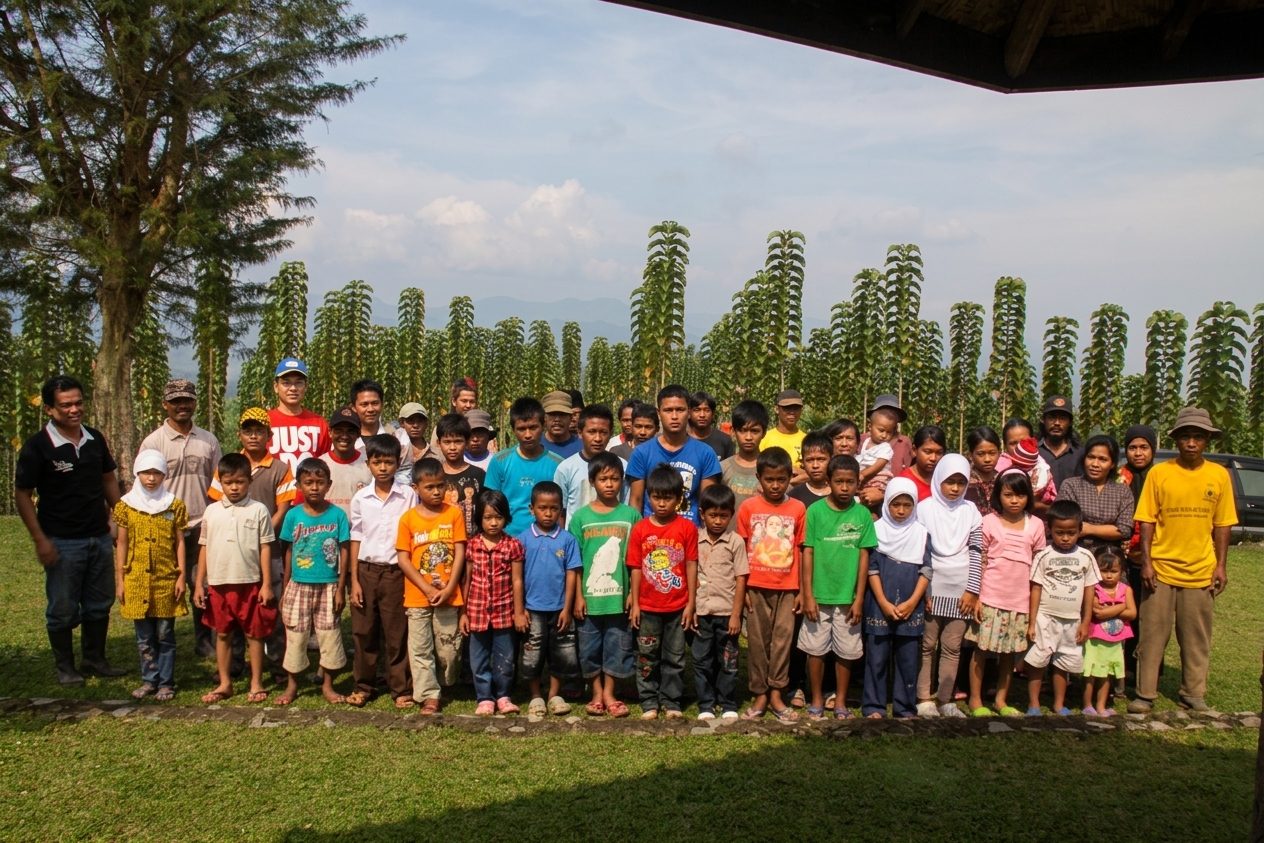
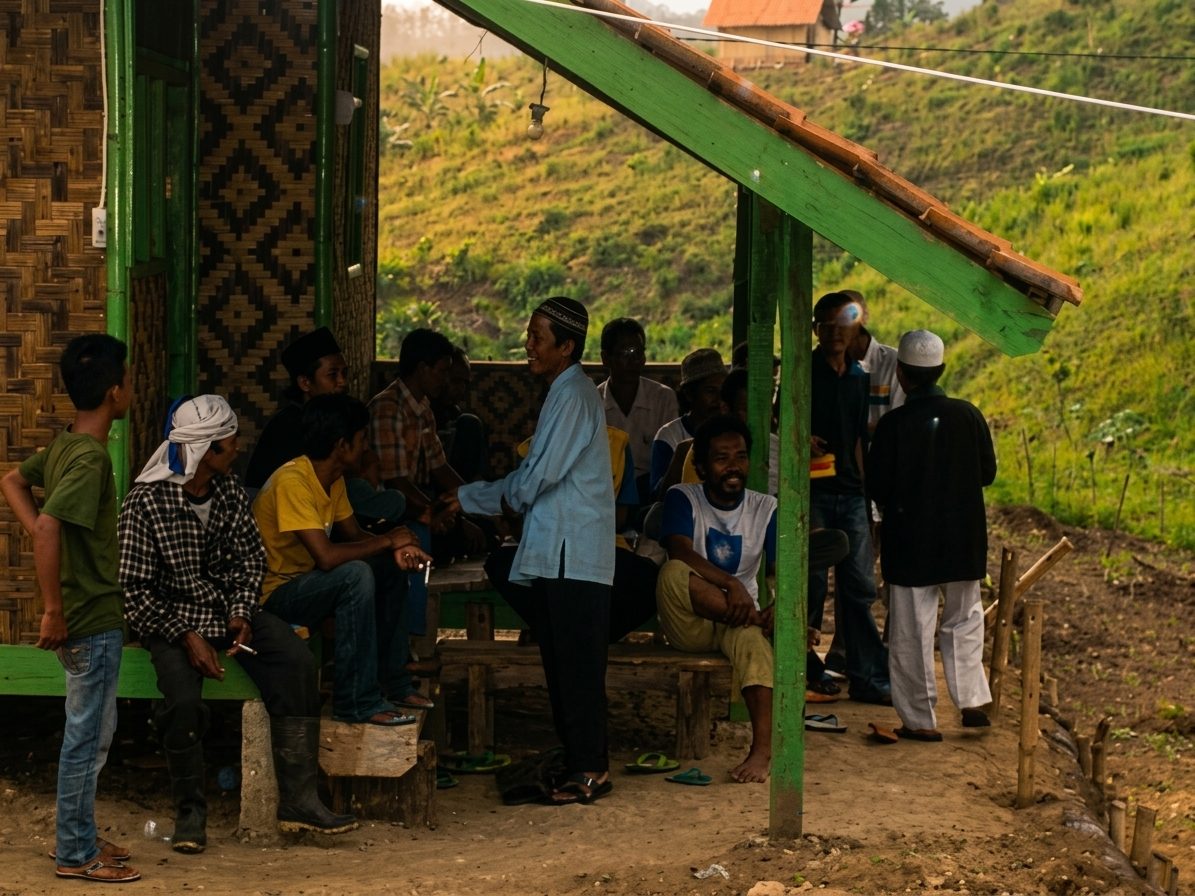
About thirty families have lived and worked on the property continuously since the first few years of planting. Each family has housing on site. They are the reason the forest still stands.
Sekitar tiga puluh keluarga telah tinggal dan bekerja di lahan ini terus menerus sejak tahun-tahun awal penanaman. Setiap keluarga memiliki rumah di lokasi. Mereka adalah alasan hutan ini masih berdiri.
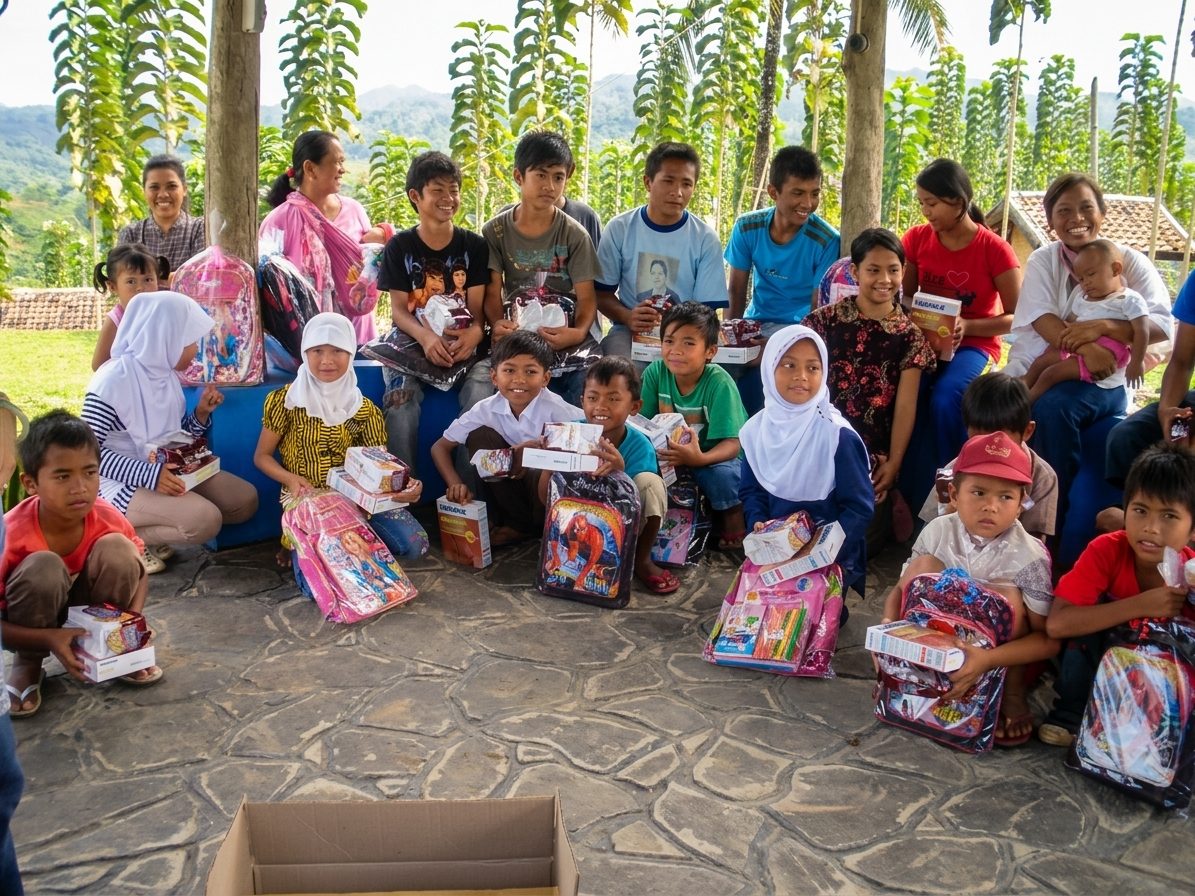
From early in the project we built a scholarship program around the workers' families. It is called Anak Asuh. It covers school costs for the children of plantation workers, from kindergarten through to university. Several of the children we sponsored as kids have finished their degrees and now hold jobs of their own.
Sejak awal proyek kami membangun program beasiswa untuk keluarga pekerja. Program ini dinamakan Anak Asuh. Program ini menanggung biaya sekolah anak-anak pekerja kebun, dari TK hingga universitas. Beberapa anak yang kami sponsori sejak kecil kini telah menyelesaikan kuliah dan memiliki pekerjaan sendiri.
The numbers below are first-order estimates derived from published sequestration ranges for managed teak in tropical Asia (IPCC 2019 Tier 1, and peer-reviewed Indonesian teak biomass studies), applied to 200 hectares over 18 growing seasons. They are not a verified carbon claim. We commit to a full third-party verification with an accredited body — Verra VCS, Gold Standard, or Plan Vivo — as part of any grant or carbon agreement.
Angka-angka di bawah merupakan estimasi awal yang diturunkan dari rentang serapan karbon yang dipublikasikan untuk jati di Asia tropis (IPCC 2019 Tier 1, dan studi biomassa jati Indonesia bertinjau sejawat), diterapkan pada 200 hektar selama 18 musim tumbuh. Ini bukan klaim karbon terverifikasi. Kami berkomitmen untuk verifikasi pihak ketiga dengan badan terakreditasi — Verra VCS, Gold Standard, atau Plan Vivo — sebagai bagian dari setiap perjanjian hibah atau karbon.
Sequestration rate of 5–8 tCO₂e/ha/yr applied with a growth curve across an 18-year span (lower in early years, ramping with canopy closure around year 8–10). Above-ground living biomass is the dominant pool; soil organic carbon and litter pools are not included in the headline figure. The estate is open to walk-throughs, sample plots, and remote-sensing comparison against 2008 baseline imagery.
Laju serapan 5–8 tCO₂e/ha/tahun diterapkan dengan kurva pertumbuhan sepanjang 18 tahun (lebih rendah di tahun-tahun awal, meningkat saat tajuk rapat sekitar tahun 8–10). Biomassa hidup di atas permukaan adalah cadangan dominan; karbon organik tanah dan serasah tidak dimasukkan dalam angka utama. Kebun terbuka untuk telusur lapangan, plot sampel, dan perbandingan penginderaan jauh terhadap citra dasar 2008.
Survey plots, seedling provenance, planting dates, fertiliser schedules. Maintained on paper and digital from the first planting season.
Plot survei, asal-usul bibit, tanggal tanam, jadwal pemupukan. Dikelola di kertas dan digital sejak musim tanam pertama.
Planted under Indonesia's Satu Milyar Pohon reforestation program in 2008 and operated continuously since.
Ditanam di bawah program reboisasi Satu Milyar Pohon pada 2008 dan beroperasi terus menerus sejak itu.
Photography from 2008 to present, organised by phase: land preparation, nursery, planting, worker community, maturing forest by year.
Foto dari 2008 hingga sekarang, diatur berdasarkan fase: persiapan lahan, persemaian, penanaman, komunitas pekerja, hutan dewasa per tahun.
A verification team can walk the property by appointment. Two hours by road from Jakarta. We will show you the slope, the valley, and the families on it.
Tim verifikasi dapat menelusuri lahan dengan janji temu. Dua jam berkendara dari Jakarta. Kami akan menunjukkan lereng, lembah, dan keluarga-keluarga di dalamnya.
Eighteen years of documented teak reforestation on land that was bare hillside. Planted under Satu Milyar Pohon. Measurable watershed recovery. A continuing scholarship program for the worker community. We can sit down with a verification team and walk the property.
Delapan belas tahun reboisasi jati terdokumentasi di lahan yang dulu lereng gundul. Ditanam di bawah Satu Milyar Pohon. Pemulihan daerah aliran sungai yang terukur. Program beasiswa berkelanjutan untuk komunitas pekerja. Kami siap duduk bersama tim verifikasi dan menelusuri lahan.
Worker salaries, fertilizer, ongoing maintenance, and the Anak Asuh scholarships. We can break this down to a per-hectare per-month figure for any organization that wants to fund a portion.
Gaji pekerja, pupuk, perawatan, dan beasiswa Anak Asuh. Kami dapat menguraikan biaya per hektar per bulan untuk organisasi mana pun yang ingin mendanai sebagian.
Minority shares for aligned individuals or family offices who share the never-clear-cut principle. We remain majority owner and operator. Suited to a private investor who wants a long-horizon land position with a verified environmental thesis.
Saham minoritas untuk individu atau family office yang selaras dengan prinsip tanpa tebang habis. Kami tetap pemilik mayoritas dan operator. Cocok untuk investor swasta yang menginginkan posisi lahan jangka panjang dengan tesis lingkungan terverifikasi.
If a single buyer or institution wants the whole property and will commit in writing to keeping the forest standing under the same selective-trimming principle, we will consider that conversation.
Jika satu pembeli atau lembaga menginginkan seluruh lahan dan bersedia menulis komitmen untuk menjaga hutan tetap berdiri dengan prinsip jarang selektif yang sama, kami terbuka untuk pembicaraan tersebut.
If your organization, fund, or family is working on reforestation, carbon, or long-horizon stewardship in Indonesia, we want to hear from you. Two hours by road from Jakarta. We can show you the slope, the valley below, and the families who have lived on it for almost two decades.
Jika organisasi, dana, atau keluarga Anda bergerak dalam reboisasi, karbon, atau penjagaan jangka panjang di Indonesia, kami ingin mendengar dari Anda. Dua jam berkendara dari Jakarta. Kami akan menunjukkan lereng, lembah di bawahnya, dan keluarga-keluarga yang telah tinggal di sini hampir dua dekade.